Showing posts with label popular science. Show all posts

Wednesday, October 9, 2024

The First Fossil Hunters: Paleontology in Greek and Roman Times, by Adrienne Mayor (author), Donna Postel (narrator)

Tantor Media, ISBN 9781705276761, February 2021 (original publication April 2000)

I'm not sure it should really surprise me, but the Greeks, Romans, and other ancient cultures did a fair amount of paleontology.

Now, they didn't have our dating techniques, so while they had a good sense that Earth was old, and that the bones they found were from creatures that existed before us and were now gone, they had no idea how old, and didn't necessarily have a good sense of what came before what.

They also couldn't reliably tell what bones belonged with which other bones in the more jumbled and confused fossil sites. Earthquakes exposed a lot of fossils, but also jumbled them together.

Monday, March 27, 2023

Reality Is Not What It Seems: The Journey to Quantum Gravity, by Carlo Rovelli (author), Simon Carnell (translator), Erica Segre (translator), Roy McMillian (narrator)

Audible Audio, January 2014

Another interesting and well-written book about quantum physics and the nature of the universe.

Rovelli has some good things to say about the importance of science, and reviews the history of physics, starting with Demosthenes first hypothosizing the atom. It's lively and interesting, and including fun details I had previously missed. Then we get to the meat of the matter. What is the universe really made of?

The two main theories of the universe, general relativity and quantum physics. General relativity works very well at the scale of the large, while quantum physics works very well at the scale of the very small. The problem is that they don't work well together. And with black holes and the beginnings of the universe, we really need them to work together.

The most popular theory for making them work together has been string theory. String theory seems to work well, but seems not to have the kind of evidence physicists would like to see. Rovelli is not a supporter of string theory, based on the lack of evidence problem. Here he talks about another theory, loop quantum gravity.

His discussion of it makes it interesting. I freely admit I do not understand the math necessary for physics, but Rovelli makes it conceptually interesting and at least seemingly understandable. He says it has more supporting evidence than string theory, while freely admitting there's plenty of room for that to change.

It's an interesting and enjoyable book.

I have to take the efforts of the translators on faith, of course, but the results are enjoyable to listen to, and the narrator does a good job. 

I bought this audiobook.

Saturday, December 24, 2022

The Secret Life of the Mind: How Your Brain Thinks, Feels, and Decides, by Mariano Sigman (author), John Chancer (narrator)

Dreamscape Media, ISBN 9781666601855, November 2017

This is another fascinating look at the development and workings of the human brain. Sigman begins by looking at the brains of babies and toddlers, that period of life we all go through, and yet have few if any memories of. We tend to think of babies' brains as very simple, but there is in fact a lot of complex activity going on inside those little heads. Babies, by the time they are five months old, can respond to puppet shows that show puppets that help another puppet, and puppets that show another puppet that refuses to help. When offered a choice between the helpful puppet and the unhelpful puppet, the babies prefer the helpful puppet. That's an oversimplified description, but children as young as five months can already choose, and express the choice, for kinder, more helpful behavior. There are other experiments described here that show more complex moral choices babies and very young children are able to make.

Saturday, November 12, 2022

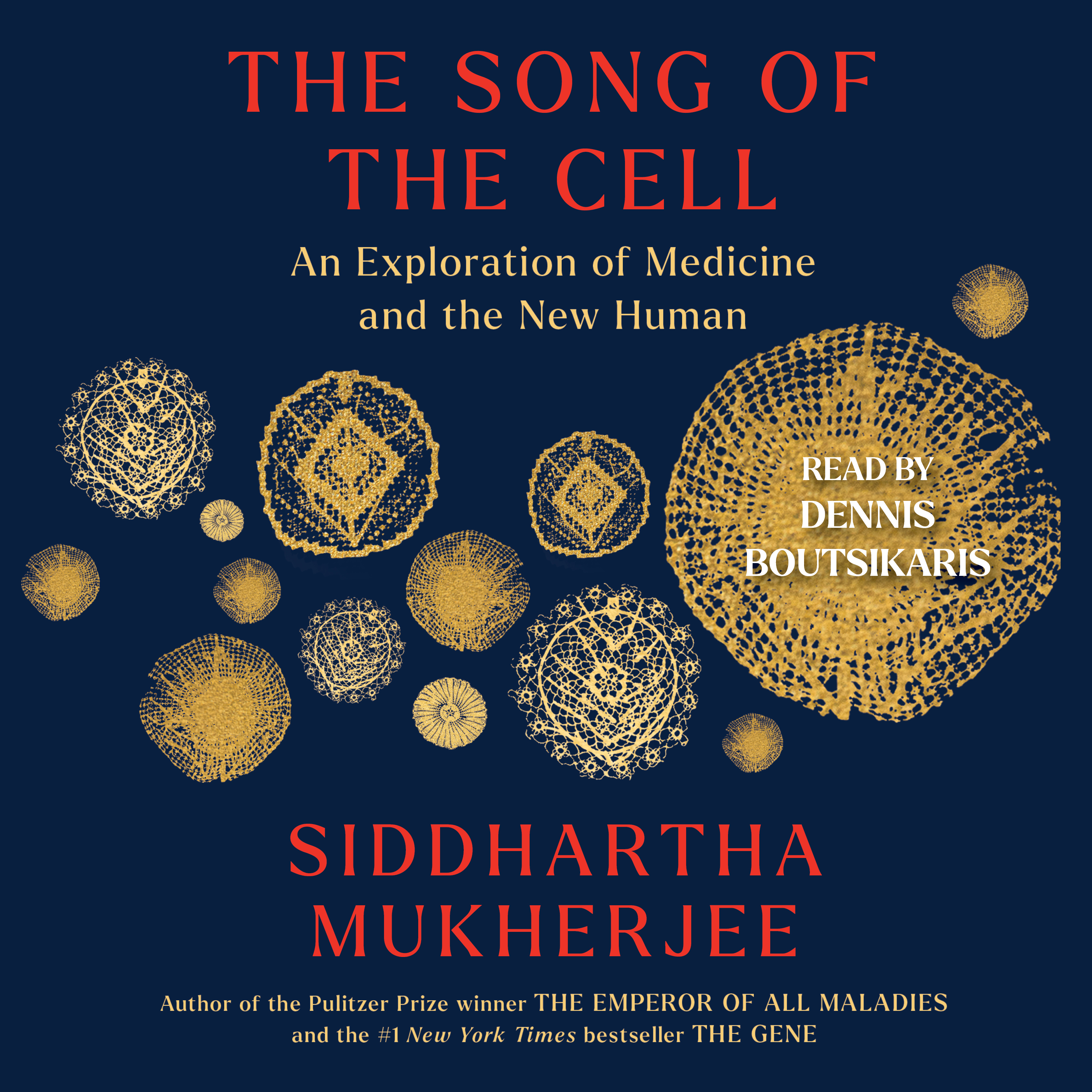
The Song of the Cell: An Exploration of Medicine and the New Human, by Siddhartha Mukherjee (author), Dennis Boutsikaris (narrator)

Simon & Schuster Audio, ISBN 9781797147093, October 2022

Siddhartha Mukherjee is a cancer physcian and researcher, and gives us a fascinating history  of cell biology and cellurlar medicine. Though cancer is a central interest for him, he clearly makes the case that most of modern medicine, not just cancer research and treatment, is cellular medicine.

Friday, November 4, 2022

The Neuroscience of You: How Every Brain Is Different and How to Understand Yours, by Chantel Prat (author, narrator)

Penguin Random House Audio, ISBN 9780593584774, August 2022

Chantel Prat, a professor at the University of Washington, says neuroscience's focus on how brains work "on average," while obviously valuable, is getting in the way of the research that helps us understand the differences between us, and our individual strengths and weakness.

She writes and narrates in a lively, informal tone, and in each chapter focuses on different areas and functions of our brains, in which we can identify ways in which different people can function very differently.

Friday, September 23, 2022

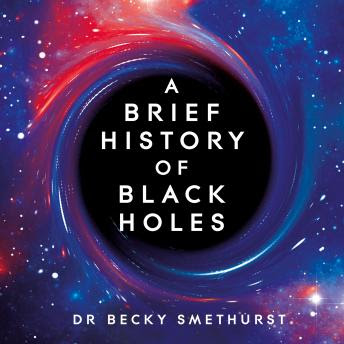
A Brief History of Black Holes: And Why Nearly Everything You Know About Them is Wrong, by Becky Smethurst (author, narrator)

Macmillan, September 2022

Becky Smethurst is an astrophysicist with a great love of black holes, and a desire to share her enthusiasm for them with the rest of us.

She tries to cover, concisely but with absorbing detail, everything important about them, starting with the important facts that they're not black, and they're not holes. They're not black because an active black hole has an accretion disk which generates a great deal of light and other radiation. They're not holes, because that absolute darkness inside the accretion disk isn't a void. It's an immensely dense accumulation of matter, usually many, many times the mass of a star--certainly our star. Smethurst compares  black holes to mountains, which I find not personally satisfying, but entirely reasonable.

Thursday, September 22, 2022

Who We Are and How We Got Here: Ancient DNA and the New Science of the Human Past, by David Reich (author), John Lescault (narrator)

Blackstone Publishing, ISBN 9781982541286, June 2018

This is the least satisfying of the books I've read/listened to about genetics and the history of human evolution.

In many ways it's excellent. Reich is voracious in absorbing and telling us about other people's research as well as his own. His ego isn't tied up in his own theories; he's enthusiastic in reporting on research results that overturn his own theories and prior work. In many ways, it's both informative and enjoyable.

And yet. Reich seems utterly unaware that he has any biases. He says he's arguing against racism, being very clear that our traditional ideas about race just have no basis in science. Then he goes on to say that the best way to study human genetics is by large population groups, and that some large modern population groups have been separated long enough for significant differences of cognition and temperament to exist.

Wednesday, August 31, 2022

Existential Physics: A Scientist's Guide to Life's Biggest Questions, Sabine Hossenfelder (author), Gina Daniels (narrator)

Penguin Random House Audio, ISBN 9780593592885, August 2022

Like The Disordered Cosmos, this is a book by a woman physicist, taking about her life and work in physics. And that's pretty much where the resemblance ends.

Chanda Prescod-Weinstein is a black American woman of Caribbean descent on her mother's side and Russian Jewish descent on her father's, who describes herself as a Reconstructionist Jew. She's encountered, and engaged strongly with, issues of racism and sexism in the world of physics. She says it has robbed her of a lot of the joy of doing physics.

Sabine Hossenfelder is a white German woman who hasn't encountered, or chooses not to mention, any issues of sexism in her professional life. She expresses seemingly pure joy in doing physics. That makes this a much easier book to listen to, though as I  mentioned in my review, Prescod-Weinstein engaging those hard issues makes it a valuable book in its own right.

Tuesday, August 23, 2022

The Disordered Cosmos: A Journey into Dark Matter, Spacetime, and Dreams Deferred, by Chanda Prescod-Weinstein (author), Joniece Abbott-Pratt (narrator)

Hachette Audio, ISBN 9781549133961, March 2021

This is simultaneously a book about about physics and in particular dark matter, and an account of what it's like to be a black American woman of Caribbean extraction in the world of science, and in particular in physics.

Prescod-Weinstein loves physics, and started loving physics as a child, looking up at the night sky. Later in the book, she notes that her childhood in Los Angeles gave her no idea what she was missing until later in life, when she was a working theoretical cosmologist and astrophysicist. When, in the course of the book, she's talking about physics, she's often expressing joy and excitement.

When she's talking about being a black American woman of Caribbean extraction working in physics, not so much.

Saturday, August 13, 2022

Beasts Before Us: The Untold Story of Mammal Origins and Evolution, by Elsa Panciroli (author), Ruth Urquhart (narrator)

Tantor Media Inc., ISBN 9781666142747, September 2021

For a long time, most of us have had the impression mammals first emerged in the late Cretaceous, not long before the asteroid that wiped out the non-avian dinosaurs, 66 million years ago. In reality, as Elsa Panciroli explains here, the line that became mammals, the Synapsida, began their split from reptiles in the late Carboniferous, over 300 million years ago.

Panciroli doesn't just tell us about the mammals, but about women as well as men who did important work in uncovering the fascinating, and longer than we often assume, history of mammals. She also talks about some of the less attractive history of paleontological research, the degree to which racism produced not just imperialistic dismissal of local knowledge and observations, but real crimes. This isn't, however, a politicized history; it's just reporting facts about the history of paleontology that are often ignored.

Monday, August 1, 2022

Tales from the Ant World, by Edward O. Wilson (author), Jonathan Hogan (narrator)

Recorded Books, ISBN 9781980091714, August 2020

Edward O. Wilson was a highly respected and accomplished myrmecologist, i.e., an expert on ants.

You may not think ants are fascinating, but in this book, narrated by Jonathan Hogan, Wilson geeks out about them with joy. In this short book, he gives us overviews of twenty-five different species of ants. Fire ants and leafcutter ants, the fastest-moving ants and the slowest-moving ants, ants who conduct slave raids to steal juveniles who will emerge into adulthood in the raiders' colony and grow up as part of that colony. Ants who farm and ants who keep "cattle." 

Friday, March 25, 2022

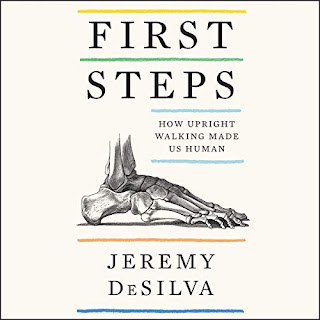
First Steps: How Upright Walking Made Us Human, by Jeremy Desilva (author), Kaleo Griffith (narrator)

HarperAudio, ISBN 9780062938534, April 2021

Jeremy DeSilva gives us a fascinating look at the early evolution of humans, from the, to me, unfamiliar perspective of the human foot and why we walk upright. It's an account that's conversational, clear, empathetic to both early hominins and to fellow researchers, past and present, and careful to present good scientific information, the prevailing understanding of it or his view of it, as well as competing views, with the evidence that supports the competing views. It's fair to say he's not overburdened with ego, and he has a good sense of humor.

Thursday, February 17, 2022

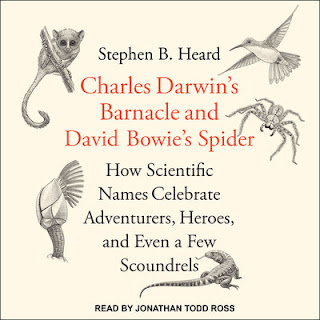
Charles Darwin’s Barnacle and David Bowie’s Spider: How Scientific Names Celebrate Adventurers, Heroes, and Even a Few Scoundrels, by Stephen B. Heard (author), Jonathan Todd Ross (narrator)

Tantor Media, ISBN 9781977300317, March 2020

When Carl Linnaeus invented the binomial naming system, he revolutionized taxonomy, and aside from the purely practical effects, he made possible eponymous naming--naming plants and animals after people. Stephen B. Heard gives us a very lively account of eponymous names, the people they commemorate, and the personalities involved. There are, as the subtitle says, "adventurers, heroes, and even a few scoundrels." It's very entertaining! 

Monday, December 27, 2021

Unthinkable: What the World's Most Extraordinary Brains Can Teach Us About Our Own, by Helen Thomson (author, narrator)

HarperAudio, ISBN 9780062847959, June 2018

Helen Thomson is a science writer with New Scientist, who became fascinated by the human brain, its complexity, and what can happen when that complexity goes wrong. In this book, she recounts her meetings and experiences with people with nine different, unusual brain conditions. This isn't a clinical textbook; it's about Thomson exploring how these conditions affect the lives of the individuals living with them. She also talks about what we've learned about these conditions and their origins, but that's not the main focus, here. The people are. And no matter how strange the conditions are, she always treats these people with respect, not as mere examples of how bizarre humans can be.

Monday, December 20, 2021

Tales from Both Sides of the Brain: A Life in Neuroscience, by Michael S. Gazzaniga (author), Johnny Heller (narrator)

HarperAudio, ISBN 9780062373410, February 2015

Michael S. Gazzaniga is a leading scientist in the field of cognitive neuroscience, having in fact helped to create the field as the study of the brain advanced. In this book, he discusses his life and his research. He did important, even critical, research on split brains (brains where the corpus callosum, the nerve bundle connecting the left and right sides of the brain) was severed--sometimes in accidents, but often intentionally, in cases where epileptic seizures were unmanageably severe and frequent. It was effective enough to be considered justified in very severe cases--especially as it seemed to have no obvious impact on normal functioning.

Monday, December 6, 2021

The Invention of Nature: Alexander von Humboldt's New World, by Andrea Wulf (author), David Drummond (narrator)

Highbridge Audio, October 2015

This is a fascinating biography of an impressive scientist, whom I don't believe I ever heard of before.

Alexander von Humboldt was the second son of an aristocratic Prussian family, who used his inheritance to pursue a career as, essentially, the first real naturalist. At 27, he went on an expedition to South America, with one other scientist and a couple of guides. In the course of his expedition he invented the concept of isotherms, which made global study of climate possible. He collected specimens, climbed mountains, and took detailed notes on plant and animal life, climate, and the effects of wholesale clearing of trees and other inconvenient plants and animals. Humboldt's journey, and his letters reporting home on it, were widely covered in the newspapers, worldwide, not just in his native Prussia. He returned home, and continued to be both a celebrity and a working scientist--and in many was perhaps the first science popularizer. 

Wednesday, September 22, 2021

Orca: How We Came to Know and Love the Ocean's Greatest Predator, by Jason M. Colby (author), Paul Heitsch (narrator)

Highbridge Audio, ISBN 9781684415533, January 2019

Orcas are the most popular, profitable, and of course, controversial, animals on display in history. The controversy stems largely from the fact that captivity is objectively horrible for orcas. They're large, intelligent, and highly social. They live in large, matrilineal family groups, who live near other, related family groups whom they socially interact with. There's no way we can provide a truly appropriate habitat for orcas in captivity. When captured, they lose their entire families, their entire social group, they lose the auditory stimulation that's a normal part of their world, they're forced to change their diets to what we can feed them, and they are confined to what are rceally unbearably small spaces for orcas. The more people learn about this, the more people want no more orcas in captivity.

Monday, August 9, 2021

Owls of the Eastern Ice: A Quest to Find and Save the World's Largest Owl, by Jonathan C. Slaght (author, narrator)

Tantor Audio, ISBN 9781494547790, October 2020 (original publication August 2020)

As a fledgling birdwatcher, Jonathan Slaght, in the far eastern Russian province of Primorye, saw, and managed to get a picture of, a very large, and unfamiliar, owl. When he sent the picture to experts, they identified it as a Blakiston's fish owl, the world's largest, and most elusive, owl.

When Slaght took that picture, the fish owl had not been seen that far south in a hundred years. Its range stretches from Hokkaido, Japan, to Primorye in Russia, and it's both elusive and endangered. Slaght was working towards his Ph.D., and had found his research topic--very little was known about Blakiston's fish owl, and it's endangered. Learning more about both the bird itself, and its habitat needs, to create a conservation plan, would be an excellent project.

Thursday, July 22, 2021

A Brief History of Everyone Who Ever Lived: The Stories in Our Genes, by Adam Rutherford (author, narrator)

Tantor Audio, September 2018

Adam Rutherford gives us a fascinating tour of what genetics tells us about the history of our species, including the close relatives with whom we interbred, the Neanderthals and Denisovans.

New discoveries show the first H. Sapiens left Africa even earlier than we previously thought, and didn't always take the paths we assumed. Our DNA tells us a great deal about ourselves as a species, but not nearly as much as we like to imagine about ourselves. There just isn't that much diversity in the genome of H. Sapiens, and most of what there is, is among the peoples of Africa. The rest of us haven't been gone from Africa long enough, or separated from each other long enough, to produce that much genetic variation.

Friday, July 2, 2021

The Learning Brain, by Thad A. Polk (author, narrator)

The Great Courses, May 2018

In this set of 24 half-hour lectures, Thad Polk gives us a fascinating, and often entertaining, rundown on the human brain, memory, and learning. Looking at long-term memory, working memory, and the mutability of memory, we get a good overview of how our brains work in the areas that are most often of everyday interest to us.

Some of the important areas to understand are explicit memory (explicit, declarative knowledge that's easy to talk about), implicit memory (what I've often heard called "muscle memory," though of course it's formed in the brain, not in the muscles, and which you can't really talk about easily), and the mutability of memory. Our memory of events isn't like a video recording, no matter how vivid it seems. We retain some key details, and fill in the rest--meaning that over time, even those "flashbulb memories"  of major, shocking events, such as the Challenger explosion or 9/11, can change substantially.