Showing posts with label biology. Show all posts

Saturday, November 12, 2022

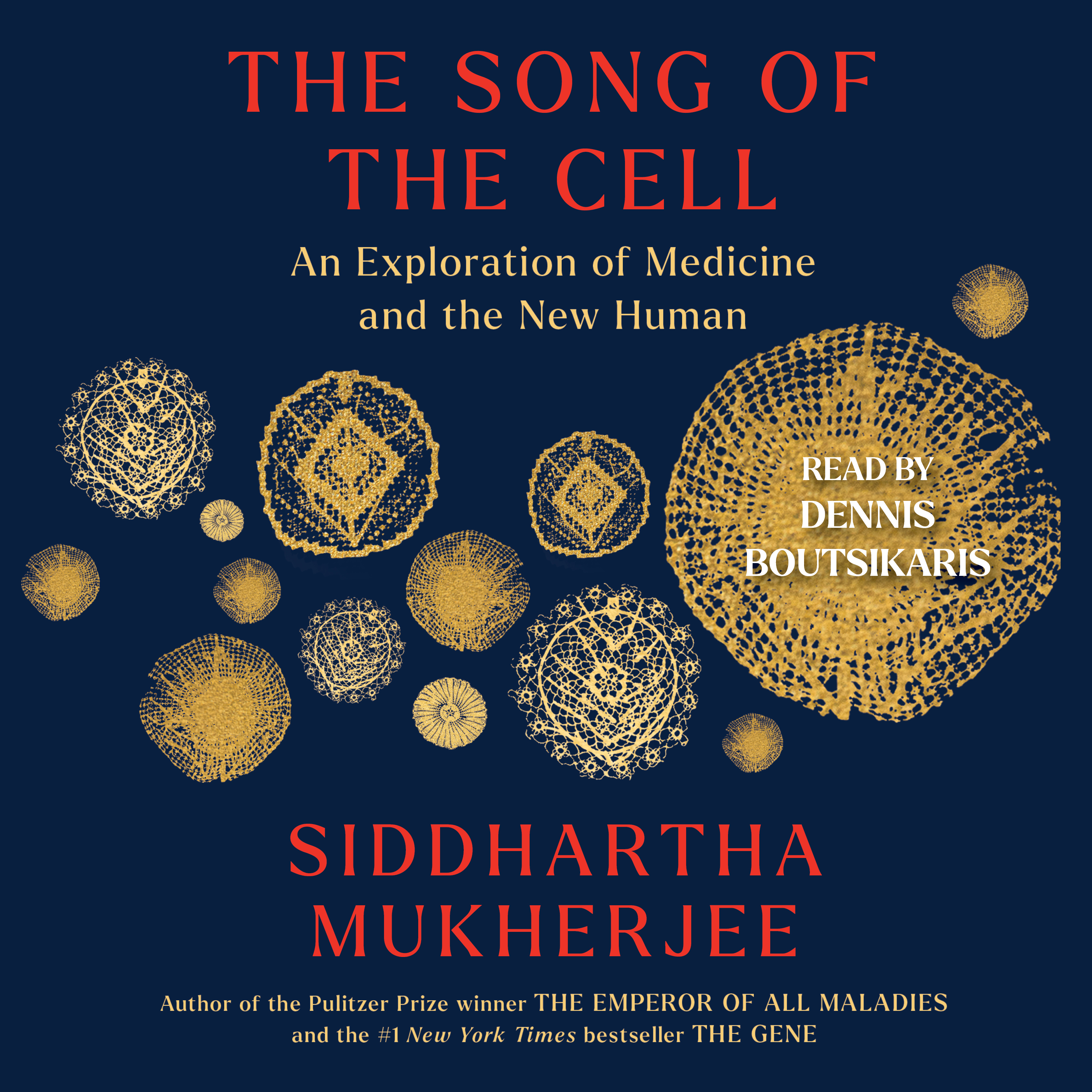
The Song of the Cell: An Exploration of Medicine and the New Human, by Siddhartha Mukherjee (author), Dennis Boutsikaris (narrator)

Simon & Schuster Audio, ISBN 9781797147093, October 2022

Siddhartha Mukherjee is a cancer physcian and researcher, and gives us a fascinating history  of cell biology and cellurlar medicine. Though cancer is a central interest for him, he clearly makes the case that most of modern medicine, not just cancer research and treatment, is cellular medicine.

Monday, March 7, 2022

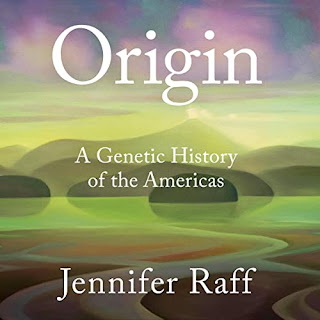
Origin: A Genetic History of the Americas, by Jennifer Raff (author, narrator), Tanis Parenteau (narrator)

Twelve Books, ISBN 9781549148385, February 2022

The peopling of the Americas, the arrival here of anatomically modern humans, and their development  into the peoples I was originally taught to call American Indians and a little later Native Americans, is far more complicated than I was taught in school. It's pretty clear at this point that humans didn't first arrive here a mere ten to twelve thousand years ago. It also appears clear, based on genetic evidence, that they arrived in more than one wave.

And beyond that, it's really, really complicated. The reasons for the complexities are partly the fact that it's very difficult to recover ancient DNA, especially from bones that were buried in warm, wet environments. We also don't have a lot of tools much older than 12 to 15 thousand years ago that are clearly human-made tools. Some, but not enormous numbers.
Saturday, January 12, 2019

Molecules of Emotion: Why You Feel the Way You Feel, by Candace B. Pert (author, narrator)

Simon & Schuster Audio, ISBN 9780743541398, September 1997

Candace Pert, a neuroscientist and discoveror of the opiate receptor, recounts both the intricate relationship between mind, body, and emotions, and her own career uncovering those connections and the neurochemical basis of them. Beginning her career in the early 1970s, gender was an even bigger obstacle than it is now, which no cultural or legal expectation that it shouldn't be. Sometimes she had to fight for recognition of her contributions; other times she had to fight to be able to do the work at all.

But along the way, she made major discoveries, and had life-changing experiences. The mind-body dichotomy was still unquestioned scientific orthodoxy in her early days. She doesn't say, but I will: Rene Descartes has a lot to answer for. Pert's work with neuropeptides and their receptors helps to rebuild the essential unity of the person, mind, body, and emotions, and uncover the connections between our emotional health and our physical health.