Saturday, December 22, 2012

A Christmas Garland, by Anne Perry

Ballantine Books, ISBN 9780345530745, October 2012

Thomas Pitt's Special Branch boss, Victor Narraway, wasn't always the head of Special Branch. Long ago and far away, he was a twenty-year-old British Army lieutenant in India during the Mutiny. As the youngest officer, and new to the unit he's now in, Lt. Narraway gets assigned a fairly nasty task: defending an Army medic charged with a horrible murder.

The medic was well-liked, but so was the guard who was killed. And this killing took place as part of the escape of a prisoner, who after escaping also slaughtered an Army patrol. Also, there's no evidence against the medic except that everyone else's location is positively accounted for at the time of the murder. He's the only one who could have done it.

It's an altogether nasty situation, and Lt. Narraway knows he's expected to not make too much trouble as the defense, and let the situation be resolved with no more pain than is absolutely unavoidable.

But it bothers him that there is no actual evidence against his client, and that his client is very, very convincing when he says he didn't do it. With less than two days to work with, Narraway starts investigating.

It's a clever mystery with an unexpected but convincing resolution.

Recommended.

I received a free electronic galley of this book from the publisher via NetGalley.

What's a Dog For? The Surprising History, Science, Philosophy, and Politics of Man's Best Friend, by John Homans

Penguin Press, ISBN 9781594205156, November 2012

There's a lot of interesting material here, and yet in the end I am deeply frustrated with this book.

Homans gathers together in highly readable form much of the most recent research on dogs, their ancestors, and their relationship with us. Teasing out the history of dogs, just barely genetically different from wolves, has been a tricky business, not least because early dogs and proto-dog wolves would not have been physically different from their wolf relatives in any way that shows up in the fossil record. It's a fascinating story, and almost as fascinating is the story of how hard it has been to get any real research on dogs. Dogs, you see, were until the last couple of decades too mundane and familiar for research on them to be "respectable." Homans has studied the research, interviewed the researchers, and attended the academic conferences, and has a lot of good information to impart.

Thursday, December 13, 2012

Fox Tracks, by Rita Mae Brown

Random House, ISBN 9780345532978, November 2012

Jane Arnold rides again, this time in pursuit of a killer riding with her own hunt.

The first signs of trouble are far from Virginia, in New York City, where "Sister" Jane Arnold, her lover Gray Lorillard, and two of the young ladies recently graduated from Custis Hall, and now attending Princeton, are attending the annual Masters of Foxhounds Association dinner. During this New York interlude, Jane and Tootie visit a tobacco shop to buy a gift for Gray, and meet a charming, Cuban-born tobacco merchant.

Wednesday, December 12, 2012

What Matters in Jane Austen, by John Mullen

Bloomsbury Publishing, ISBN 9781408820117, November 2012

Mullen gives us a wonderful trip through Jane Austen's novels, including the unfinished Sanditon, looking at obvious, non-obvious, and "I never thought to ask that!" questions about Austen's world, daily life, the behavior and relations of the characters.

What people call each other seems a simple and obvious detail, but it reveals a wealth of information about status in a class-conscious society, relationships between characters, and the formality that governed relations even between husband and wife. When characters violate the rules, it's not a throwaway detail. It reveals important information about the characters and their relationships. In Persuasion, Anne Eliot's sister Mary and Mary's husband are a rare case of husband and wife addressing each other by their given names. This isn't the norm as it is for us, or the sign of marital intimacy it is later in the 19th century. Instead, it's a symptom of the disrespect and frustration the couple feel towards each other.

Another aspect of daily life in Austen's world that's mostly alien to us now, where we don't have the same assumptions that Austen and her original readers did is in both the formality and the ubiquity of mourning. Strict rules governed what people could do and what they could wear when recently bereaved of their near and not-so-near relations and connections. Death was all too frequent, could come as the result of what started off as apparently a minor cold, and failure to observe mourning for family, connections, friends, etc., could cause offense and long-lasting ruptures between different branches of a family or formerly close friends.

This is a clearly written, engaging exploration of Austen's world, her fiction, and of what a daring and even experimental writer she was, creating major innovations in story-telling that are with us today.

If you enjoy Austen and enjoy going "behind the scenes" to see what makes a novel work, this is a fascinating, rewarding read.

Highly recommended.

I received a free electronic galley of this book from the publisher via NetGalley.

Sunday, October 7, 2012

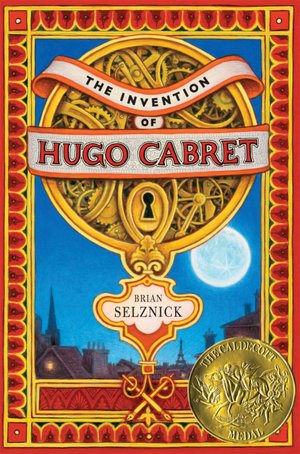
The Invention of Hugo Cabret, by Brian Selznick

Scholastic Audio, ISBN 9780545003636, March 2007

Georges Méliès was a magician who became a legendary early French filmmaker, the first to use complex special effects to tell imaginative stories that did not reflect the real world. He then lost nearly everything, including his films and his automata, due to business and financial reverses and the development of film beyond where he had taken it. This is a fictional story of Méliès in his later years, and the young boy who helps to pull him out of his decline.

Hugo Cabret is the son of a clockmaker who runs his own shop, and also works at a local museum, repairing clocks, automata, and other machinery. In the attic of the museum he finds an amazing automaton, a man sitting at desk, holding a pen, poised to write. It's in terrible shape, but he shows it to Hugo, and starts work on repairing it during his spare time at the museum.

Saturday, October 6, 2012

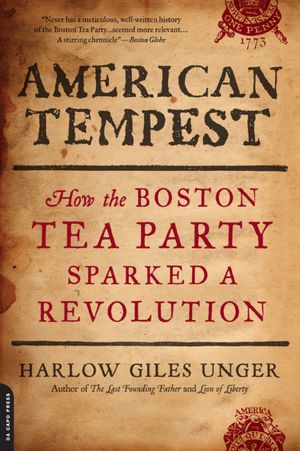
American Tempest: How the Boston Tea Party Sparked a Revolution, by Harlow Giles Unger (author), William Hughes (narrator)

Blackstone Audio, ISBN 9781441779120, February 2011

This is a clear, highly readable, and fascinating account of the Boston Tea Party, what led up to it, what followed, and how this became the spark that created the American Revolution.

Many things have been said and repeated about the Tea Party that simply aren't true. It wasn't about the tax on tea making tea unaffordable; the tea duty had been cut to the point it was undercutting the smugglers bringing in Dutch tea. It wasn't an act of vandalism by drunken thugs. the Tea Party crew were all responsible citizens, small merchants, professionals, farmers, and skilled craftsmen of Boston and the surrounding countryside. They were extremely careful to do no damage except to the tea, and to cause injury to no one.

Friday, October 5, 2012

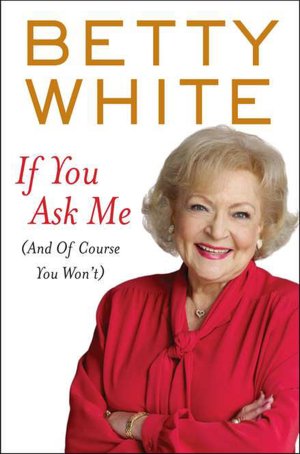
If You Ask Me (And Of Course You Won't), by Betty White

Penguin Group, ISBN 9780142429365, May 2011

This is a delightful meander through memories and daily life by the delightful Betty White. It's organized topically rather than chronologically, and covers the wide range of Ms. White's interests, including acting, writing, her family and friends, and of course her dedication to helping animals.

Some of the reminiscences included are working on the three hit tv shows that have defined her acting career--The Mary Tyler Moore Show, Golden Girls, and Hot in Cleveland. She also talks about her entirely unexpected and at first not entirely welcome guest host stint on Saturday Night Live, as the result of a spontaneous, popular Facebook campaign. In the end she enjoyed the experience, but initially she dreaded it, because she's just not accustomed to the kind of comedy that defines SNL.

Ms. White's many fans in the animal rescue world will be pleased that she also includes several reminiscences about her own pets and some of her pet rescue activities--although in a typically modest way that belies her impact.

It would be wrong to say anything more about this book. It's an enjoyable read, and if, as I did, you listen to the audiobook, Ms. White herself reads it in her own thoroughly engaging style.

Recommended.

Thursday, October 4, 2012

We Bought a Zoo: The Amazing True Story of a Young Family, a Broken Down Zoo, and the 200 Wild Animals That Change Their Lives Forever, by Benjamin Mee (author), Gildart Jackson (narrator)

Blackstone Audio, ISBN 9781441789365, June 2011

In 2006, Benjamin Mee and his extended family bought a broken-down, failing zoo in the English countryside, the Dartmoor Wildlife Park. If that isn't odd enough to get your attention, the reason should: Mee's father had died, his widowed mother could not maintain their big house on her own and would not be happy in a smaller home where she couldn't have all her children and grandchildren visit regularly.

And several members of the family, including Benjamin Mee and his mother, had a dream of running a zoo. That's right. They bought a zoo, in part, to be a family business, and in part, to be a retirement home for their elderly mom.

Wednesday, October 3, 2012

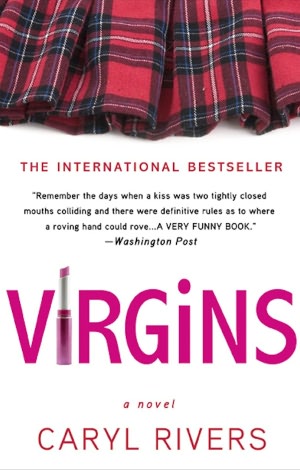
Virgins, by Caryl Rivers

Diversion Books, May 2012

This is the re-release of a delightful mid-80s novel of mid-50s Catholic school girls coming of age.

Peggy Morrison, her friends and classmates Con and Molly, seniors at Immaculate Heart of Mary High school, and her neighbor and boyfriend, Sean McCaffrey, a senior at Sacred Heart of Jesus High School, struggle with the challenges of growing up and entering adulthood. Peggy and Con dream of being writers and journalists and living a glamorous life in New York City. Sean plans to be a priest, and will be entering the seminary after graduation.

Tuesday, October 2, 2012

Packing the Court: The Rise of Judicial Power and the Coming Crisis of the Supreme Court, by James MacGregor Burns (author), Norman Dietz (narrator)

Tantor Media, ISBN 9781400162116, June 2009

This is an intentionally opinionated history of the Supreme Court of the United States of America.

Burns brings his considerable historical knowledge and literary skill to bear on what has sometimes been the most respected institution in American government, and at other times derided as partisan and backward-looking. As he traces its development from the words in the Constitution and the brilliant, energetic, ambitious, and forward-thinking John Marshall, through to today's Roberts Court, it becomes clear that Burns considers the latter view to be correct for most of the Court's history.