Monday, November 28, 2011

Splendid Summer, by Mary Matthews


Amazon Digital Editions, May 2011

Splendid Summer is a great romp, funny and fast-moving. Grace Wentworth is on her way home to Coronado, California after completing Finishing School in Europe in the 1920s. "Home" is with her Uncle Charles and Aunt Alice, because her parents died when she was a young child. On the way, she meets Jack Brewster, Pinkerton detective in charge of security for much of Coronado, and his cat, a deaf white Persian named Tatania.

She's also getting a series of rather strange and disturbing telegrams from Uncle Charles. When she goes to the train telegraph office to send a return telegram, she and Jack find the telegraph operator has been murdered.

Friday, November 25, 2011

Patriote Peril, by Thomas Thorpe


Black Rose Writing, ISBN 9781612960661, November 2011

This is a mystery/political thriller set in 1830s Canada. It's also part of Thorpe's Darmon Mystery series.

Elizabeth Darmon, her husband William, and sister and brother-in-law Emily and Charles Bagwell, have traveled to Canada to visit Elizabeth and Emily's other sister, Victoria, and her husband Richard Hudson, at the hunting lodge Richard built two years ago. During their visit, Richard takes his wife and guests off on a carriage ride to see some of the local sites, but Elizabeth has a headache and remains at the Lodge. The carriage comes back empty.

Elizabeth gets a horse from the stable and goes off to look for her relatives, while telling a stable hand to go to the nearest town and alert the authorities. When she cannot find them, she returns to the Lodge, only to find that it has burned down in the few hours she's been gone, and if any servants survived, they are not in evidence. Elizabeth is off on a wild and harrowing hunt to find her apparently kidnapped family.

Thursday, November 24, 2011

Holiday Greetings From the Star-Tribune: Shut Up and Be Grateful You Have a Low-Paid, Crummy Job With No Benefits

Editorial: Take this job and ... be glad you have it | StarTribune.com:

'via Blog this'

From the Star-Tribune editorial:

When times were better, retail giants forcing employees to work on treasured family holidays could easily be painted as corporate greed run amok. But today it’s hardly fair to paint merchants as retail Scrooges.
What a cheery, humane holiday sentiment. Times are hard, so as long as you have a paycheck at all, you shouldn't complain about being used and abused.

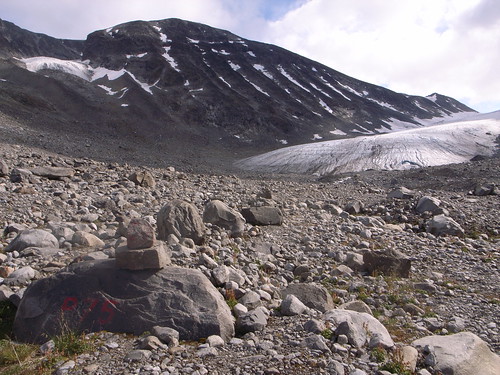
The Fate of Mountain Glaciers in the Anthropocene, A Report by the Working Group Commissioned by the Pontifical Academy of Sciences


Photo credit: Flickr, Iban , Receding Hellstugu glacier

Pontifical Academy of Sciences, April 2011

This is a short report, just seventeen pages, from a body whose existence many did not suspect: the Pontifical Academy of Sciences. The Working Group reviewed the scientific evidence on one particular piece of the global warming problem, the effect on mountain glaciers. Mountain glaciers are important because seasonal melt-off is an important source of water for communities downslope from those glaciers. The short-term effect of increased melting and the retreat of the glaciers from their former extent is more water downstream. The longer-term effect, unfortunately, is the loss of the water sources these communities rely on. The potential for suffering and disruption is high.

Wednesday, November 23, 2011

The Jinx, by D. F. Lamont


Jetpack Media, August 2011

This is an entertaining novelette about a young teenager who discovers he has very uncomfortable "powers" that make him a jinx to be around. It's bad enough when he wrecks his brother's bike, worse when a car accident endangers his family. The absolute last straw for Stephen is when he accidentally causes a fire that burns down the garage, and his parents aren't absolutely certain it was an accident.

Stephen runs away.

Misshapen stone monsters pursue the bus he's running away in.

Tuesday, November 22, 2011

The Zookeeper's Wife, by Diane Ackerman (author), Suzanne Toren (narrator)


BBC Audiobooks America, ISBN 9781602834774, June 2008

This is the story of Antonina Zabinski and her husband Jan, the director of the Warsaw Zoo, and their courageous sheltering and rescue of more than three hundred Jews as well as members of the Polish resistance during the World War II German resistance. Antonina's diaries are the main source, supplemented by other contemporary sources and Diane Ackerman's own research in Poland.

The Zabinskis were zookeepers by choice and vocation, caring deeply for the animals that were their responsibility as well as the healthy survival of at-risk species. Their pre-war home was alive with animals, both domestic and "wild," as Antonina nurtured orphans and nursed ailing or injured animals, as well as relatives, friends, and their own young son. The outbreak of war sees the slow destruction of everything they have loved, as the zoo is bombed, animals killed, and many of the dangerous animals shot by the Polish military to prevent their escaping and becoming a threat. Then the Germans move in, and things get even worse. The zoo is closed, and the animals of value taken for the Berlin Zoo. Antonina spends weeks not knowing where Jan, a reserve officer who naturally rejoined his army unit with the start of the war, is, or whether he is even alive. When he successfully makes his way back to her, they are not out of the woods. The occupation has barely begun.

Jan is a member of the resistance, and Antonina actively assists him in hiding Jews, and smuggling them out, as well as providing cover and assistance to other members of the resistance. They have the zoo land, and start a pig farm to cover the growing of food to be distributed in the Warsaw ghetto, where Jews are forced to try to survive on little more than a hundred calories a day. They hide people within their home and withing the remaining zoo buildings, and maintain an active social life with lots of visitors and guests, to ensure that they don't have a predictable pattern of activity and to make the presence of "extra" people less obvious. Conditions continue to get harsher and harsher, and the possibility of discovery ever more terrifying, while Jan and Antonina work to keep life, laughter, decency, and humanity alive in the midst of horror.

Highly recommended.

I borrowed this book from a friend.

The book trailer:


Monday, November 21, 2011

When You Went Away, by Michael Baron


The Story Plant, ISBN 9780181956800, October 2009

Gerry Rubato is struggling with the sudden, wholly unexpected death of his wife, raising their now four-month-old son by himself, and the aching absence of his much-loved daughter Tanya, seventeen years old, who ran away just a month before her baby brother Reese was born, and three months before her mother's death.

We meet Gerry and Reese as Gerry is returning to work, leaving his son for the entire work day for the first time since his wife Maureen's death. It's tough for him to do, but he knows it's necessary, and he hires the best baby-sitter available, and goes to work. Real life resumes for him.

Saturday, November 19, 2011

The Heretic's Daughter, by Kathleen Kent (author), Mare Winningham (reader)


Hachette Audio, ISBN 9781609410084, February 2011

Sarah Carrier is the daughter of Thomas and Martha Carrier, hardworking, morally upright residents of Andover in the Massachusetts Bay Colony. Unfortunately, it's the early 1690s, and the Salem witch hysteria is beginning.

One of five children, and at ten the older of the two girls, Sarah has to work hard to help maintain the family home, and life gets both harder and scarier when her mother is one of the first women accused of witchcraft. The accusations come first from a jealous relative who wants part of the Carrier property, and then are supported by some local young women, including the Carriers' former indentured servant. Over the next year, Sarah gets a painful education in human nature, the courage and devotion of her parents, and the values she herself will make the core of her life.

Thursday, November 17, 2011

For the Birds, by Aaron Paul Lazar


Paladin Timeless Books, ISBN 9781606191668, November 2011

This is a delightful, quirky mystery that moves quickly and keeps you guessing. Marcella Hollister is an antiques dealer whose husband, Quinn, enjoys breeding and showing birds. They're taking a few days off from the antiques business to attend a bird show, where Quinn hopes his parrot, Ruby, will win Best New Color. Marcella's mother Thelma, living with them since the death of Marcella's stepfather Raoul, is along for the trip, and in fact is paying for it from the money she's inherited from Raoul's carefully tended 401(k) plan. Thelma seems unusually jumpy, and is convinced that a certain white van is following them. Once they're at the hotel for the event, things don't calm down. Thelma and Quinn have a silly tug-of-war over Ruby's cage that ends in Ruby and Thelma falling into the pool along with a live electrical wire. They're quickly rescued, and Thelma is rushed to the hospital.

It takes a few days before they figure out that there is now psychic connection between Ruby's mind and Thelma's, and they are likely to unexpectedly spout each other's favorite words and phrases.

Wednesday, November 16, 2011

Unto These Hills, by Emily Sue Harvey


The Story Plant, ISBN 9781611880250, November 2011

This is a Southern family saga, not ordinarily my preferred reading, but Emily Sue Harvey weaves a compelling story with a central character who grabs you and won't let go.

Sunny Acklin is a teenager growing up in the "mill hill" village of Tucapau, South Carolina in the late forties as the book opens. Despite the stresses and embarrassments of her parents', to say the least, imperfect marriage, she grows up feeling safe and cherished in extended family of the tight-knit village. Then everything gradually starts to unravel, and Sunny is struggling to hold things together.